Panels to Pixels: How Anime's DNA Is Reshaping the Way We Experience Competitive Gaming
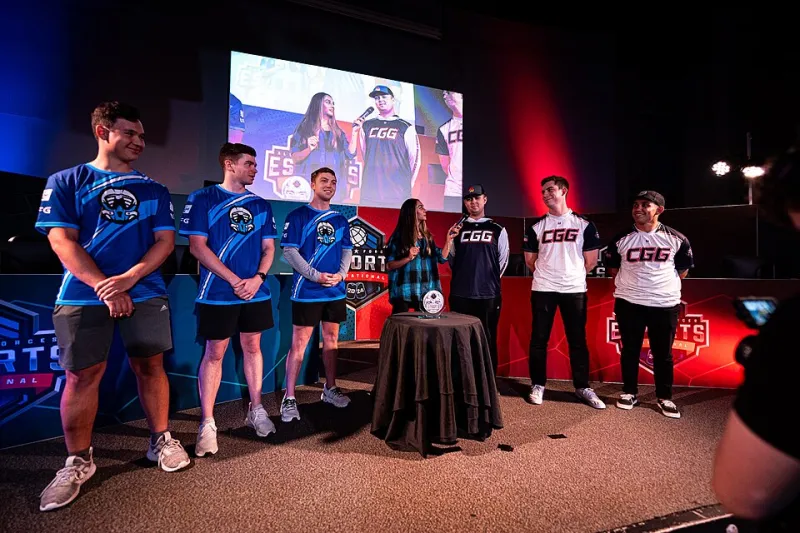
Photo: U.S. Coast Guard USCGRC by Petty Officer 2nd Class Jasmine Mieszala, Public domain, via Wikimedia Commons
There's a moment in Arcane — technically a League of Legends adaptation, not an esports product, but stay with us — where the animation shifts to something that looks ripped straight from a manga panel. Flat color, sharp lines, motion blur frozen mid-strike. It lasts maybe two seconds. But that two seconds tells you everything about where gaming and anime storytelling are converging.
Competitive gaming has always had a complicated relationship with narrative. Esports, by definition, is supposed to be about skill, strategy, and spectacle. Story felt like something you left at the character select screen. But something has shifted. Over the last several years, studios building games for the esports pipeline have started thinking less like sports broadcasters and more like manga authors. The results are genuinely fascinating.
Why Competitive Games Needed a Story Upgrade
For a long time, the dominant esports titles kept narrative at arm's length. Counter-Strike didn't need lore. StarCraft II had campaign modes, but nobody was watching the GSL for the story beats. The game was the story.
But the audience changed. Gen Z and millennial players — the core demographic for titles like Valorant, Genshin Impact (which has a competitive community despite its structure), and Honkai: Star Rail — grew up on anime. They're not just comfortable with serialized storytelling, dramatic character reveals, and emotionally loaded backstories. They expect them.
This created an opening. Studios that figured out how to make their competitive ecosystems feel like ongoing anime series — with seasonal arcs, character development, and narrative stakes — started pulling ahead in engagement metrics.
Valorant: Riot's Manga Playbook in Action
Riot Games is arguably the most deliberate studio when it comes to applying anime narrative structures to a competitive game. Valorant launched in 2020 as a tactically demanding shooter, but Riot built the lore scaffolding with the patience of a manga serialization.
Each new Agent release functions less like a patch note and more like a chapter drop. The animated trailers — particularly for characters like Neon, Harbor, and Gekko — are structured with the visual language of anime: expressive character acting, dynamic camera angles that mimic panel-to-panel transitions, and backstory delivered through implication rather than exposition.
More importantly, Riot has started using in-game events and season passes to deliver narrative content that actually advances the overarching story of the Valorant Protocol. Players who engage with the lore are essentially reading an ongoing manga in episodic form. Players who don't still get a fully functional competitive shooter. It's a dual-layer structure that manga readers will recognize immediately — the surface-level action that anyone can enjoy, and the deeper character mythology for those paying attention.
"We think about character releases the way a writer thinks about introducing a new character into an existing ensemble," a Riot narrative designer said in a 2023 developer blog. "They need to feel like they belong to a world that was already there."
The Seasonal Arc Model: Borrowed Directly from Shonen
One of the most visible ways anime storytelling has infected esports is through the seasonal arc model. Classic shonen manga — think Naruto, My Hero Academia, Demon Slayer — operates on the logic of escalating arcs. A new threat emerges, characters are tested, stakes rise, resolution hits, and then a new arc begins with the world slightly changed.
Competitive game studios have mapped this almost directly onto ranked seasons and battle pass structures. Fortnite perfected this years ago, but the anime influence has become more explicit. Genshin Impact essentially runs its entire live service model as an ongoing manga arc — each major version update introduces new regions, characters, and lore drops that feel serialized in a way that's deeply familiar to anyone who's followed a long-running manga.
The key innovation is that the competitive or live-service layer doesn't interrupt the story — it is the story. When a new character drops in Valorant and players immediately start theorycrafting about their place in the lore, that's exactly the same behavior as manga readers debating a new chapter's implications on a subreddit.
Honkai: Star Rail and the JRPG Crossover
HoYoverse has built its entire identity around this intersection. Honkai: Star Rail doesn't pretend to separate its narrative from its gameplay loop. The game is structured like a visual novel crossed with a turn-based RPG, with a story that reads — intentionally — like a premium manga series.
Character writing is rich and serialized. Each major story arc introduces new worlds, raises the stakes of the overarching conflict, and delivers character moments that players screenshot and share the way manga fans cap their favorite panels. The game has a competitive layer through its endgame content, but the community engagement is overwhelmingly driven by narrative investment.
This is significant because it proves the model scales. You don't have to be a pure esports title to benefit from anime storytelling. Any competitive game with a persistent community can leverage the emotional infrastructure that manga and anime have spent decades building.
What Gen Z Actually Responds To
There's a reason this works so well with younger audiences specifically. Gen Z players didn't just grow up watching anime — they grew up participating in anime fandoms. They wrote theories. They made fan art. They argued about power scaling on Discord servers at 2 a.m.
That participatory relationship with narrative is exactly what good esports storytelling can tap into. When Valorant drops a new cinematic that hints at a character's hidden motivations, the competitive community doesn't just watch it — they dissect it. That's the manga reader behavior pattern, transplanted into a gaming context.
Meanwhile, millennial gamers who came up on Final Fantasy and Metal Gear Solid already had appetite for games with serious narrative ambition. Anime storytelling techniques — visual expressiveness, emotionally direct character writing, mythological world-building — hit differently for an audience that grew up respecting games as a storytelling medium.
Where This Goes Next
The studios paying attention are already thinking about the next step: not just borrowing anime storytelling techniques, but building genuine transmedia ecosystems. Arcane proved that a game world can support prestige animation. Edgerunners proved that an anime tie-in can actually reinvigorate a game's player base.
The logical endpoint is a competitive game with a fully serialized anime companion series — where what happens in the show has canon implications for the game world, and what happens in the competitive meta influences the story. We're not quite there yet, but the pieces are moving into place.
For now, the shift is already real and already significant. The next time you're watching a new agent trailer and feel that pull — that sense that you need to know what happens next — that's not a coincidence. That's decades of manga storytelling craft, retooled for a controller and a ranked queue.
And honestly? It goes pretty hard.